Understanding the vaginal microbiome: why balance matters for skin health
3/02/2026 | Probiotherapy | 6 min read

“In a healthy vaginal microbiome, Lactobacilli dominate not by coincidence, but by function."
The vaginal microbiome is a highly specialised ecosystem that plays a fundamental role in intimate skin health.
When this ecosystem is balanced, it acts as an effective and natural defence system. When disrupted, its protective capacity weakens, often leading to persistent discomfort or recurrent imbalance.
At the heart of this system lies a clear biological principle: the dominance of Lactobacillus species.
Lactobacilli as ecosystem architects
In a healthy vaginal microbiome, Lactobacilli dominate not by coincidence, but by function.
They actively:
- Produce lactic acid, maintaining an acidic vaginal pH between 3.8 and 4.5
- Generate antimicrobial metabolites such as hydrogen peroxide and bacteriocins
- Reduce pathogen adhesion and proliferation
- Support epithelial barrier integrity
This acidic environment is not aggressive. It is selective. It favours beneficial bacteria while limiting the growth of opportunistic species.
A delicate and responsive ecosystem
Despite its resilience, the vaginal microbiome responds quickly to internal and external influences.
Scientific data show that factors such as antibiotic use, hormonal fluctuations, menstruation, semen exposure and conventional intimate cleansers can temporarily or persistently alter microbial composition.
These changes often lead to reduced Lactobacillus abundance and a gradual rise in pH. The ecosystem becomes less stable and more permissive to imbalance.
Rather than isolated events, these disruptions frequently accumulate over time.
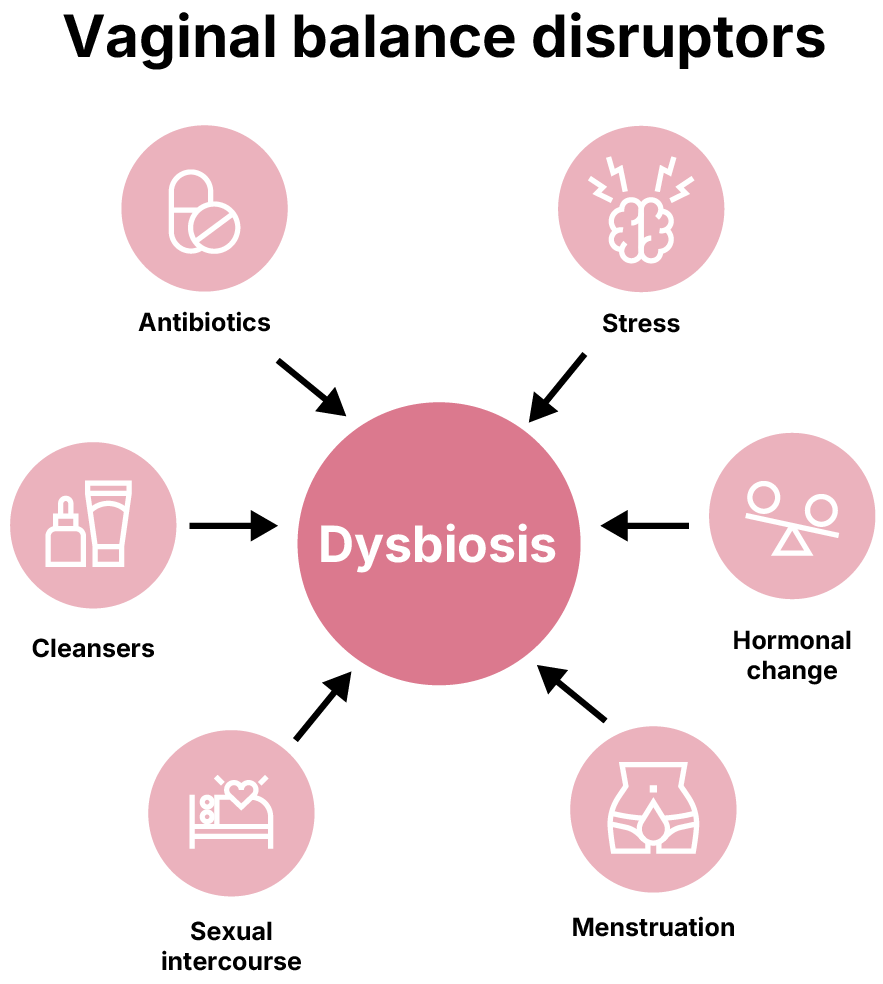
When balance is lost: dysbiosis explained
Dysbiosis occurs when protective Lactobacilli decline and microbial diversity shifts unfavourably.
This state is characterised by:
- Increased vaginal pH
- Easier proliferation of opportunistic bacteria and yeasts
- Reduced resilience of the microbial ecosystem
Clinically, dysbiosis may present as dryness, irritation, itching, odour or discomfort during intercourse. Importantly, these symptoms can persist even without an acute infection, underlining that imbalance itself is often the underlying driver.
Deviation from physiological vaginal pH increases susceptibility to microbial imbalance and infection.
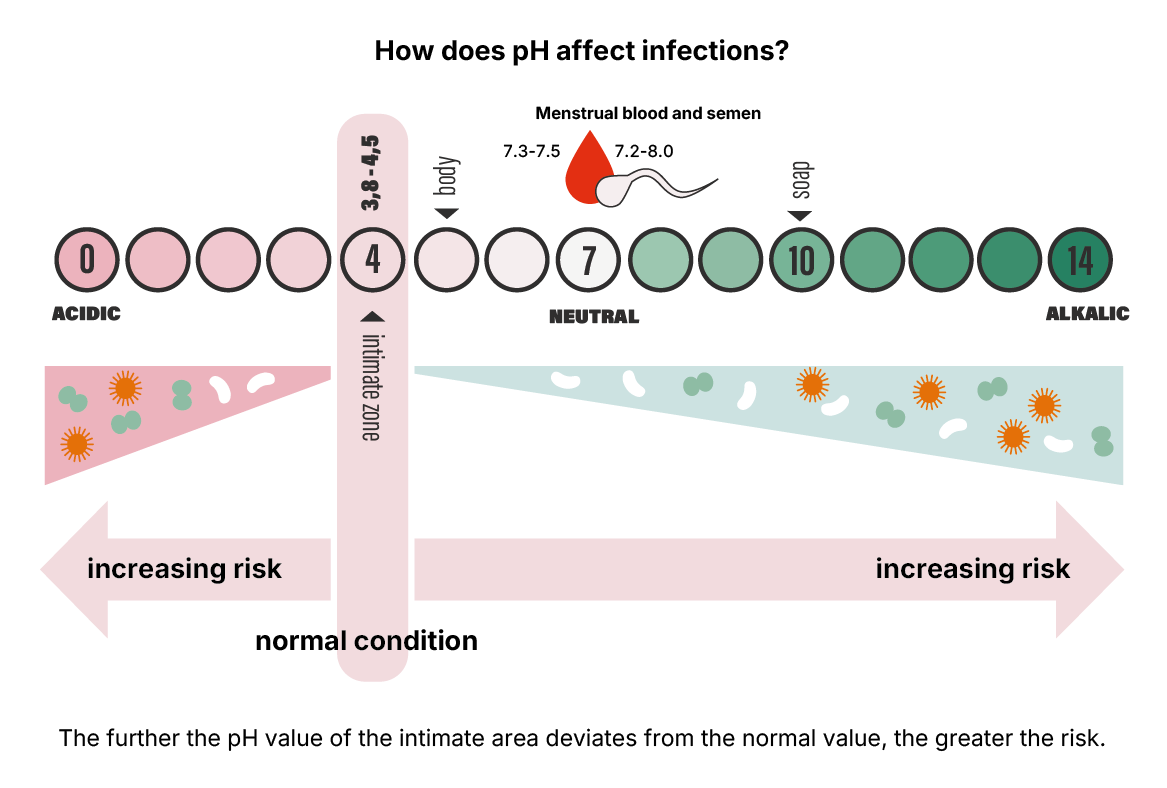
Deviation from physiological vaginal pH increases susceptibility to microbial imbalance and infection
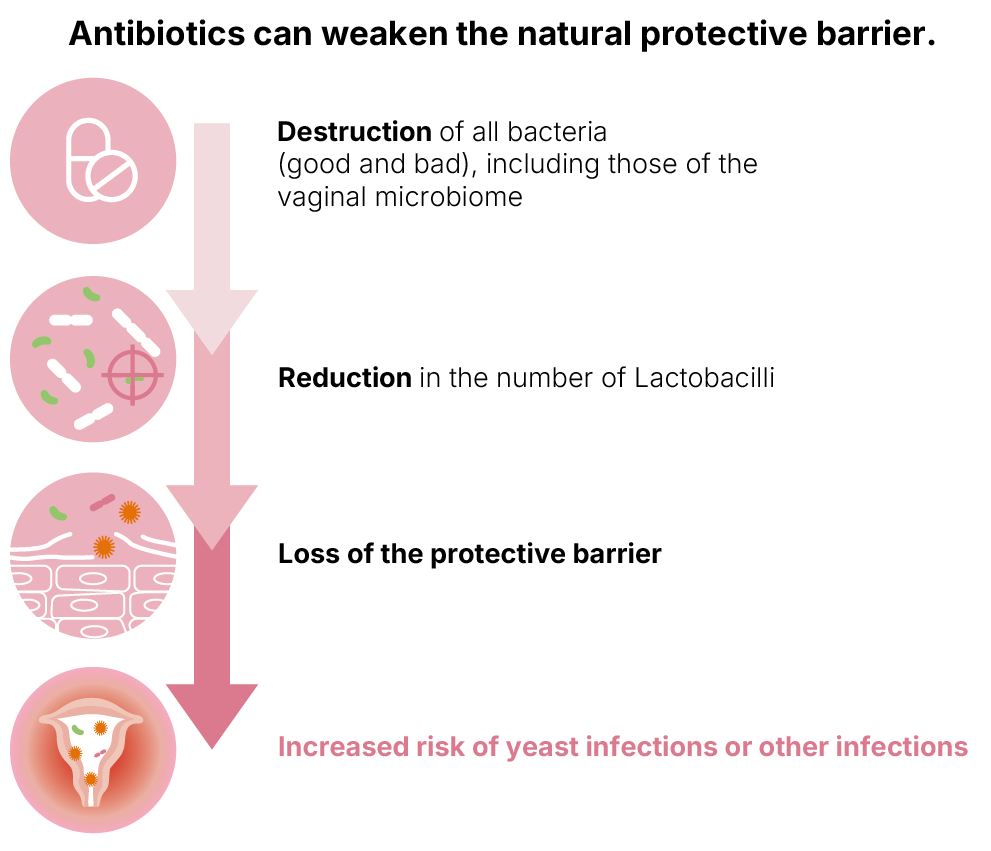
“Antibiotics can weaken the natural protective barrier and increase the risk of yeast or other infections."
Antibiotics and unintended consequences
Antibiotics remain indispensable in infection management. However, their impact on the vaginal microbiome is inherently non-selective.
Beneficial Lactobacilli are eliminated alongside pathogenic organisms. This creates a temporary ecological void in which opportunistic species can establish themselves more easily, increasing the risk of recurrence.
Without targeted support, re-establishing a stable Lactobacillus-dominated ecosystem can take time.
Why microbiome-safe intimate care matters
Effective intimate care respects microbial ecology rather than overriding it.
An ideal approach is:
- Fully microbiome-safe, with no inhibitory effect on beneficial Lactobacilli
- pH-adapted, aligned with physiological vaginal acidity
- Free from harsh surfactants, soap and fragrance
- Supported by prebiotics such as inulin and fructose that nourish beneficial bacteria
This strategy prioritises long-term balance over short-term suppression.
Probiotics and postbiotics as supportive tools
Growing scientific evidence supports the role of probiotics and postbiotics in microbiome recovery.
In vitro research demonstrates that selected strains:
- Inhibit major vaginal and urinary pathogens including G. vaginalis, E. coli, K. pneumoniae, E. faecalis and Candida species
- Reduce pathogen adhesion to vaginal epithelial cells
- Produce high levels of lactic acid, supporting pH restoration
- Contribute to faster recolonisation when combined with microbiome-safe cleansing
These findings reinforce a shift in intimate dermatology. The goal is no longer eradication, but guided restoration.
Restoring balance as a dermatological principle
At YUN Probiotherapy, intimate skin health is approached through the same ecological lens as dermatology.
By developing science-driven solutions that respect microbial ecosystems, we aim to support natural balance rather than disrupt it.
Because sustainable skin health is built on cooperation with biology.
Today, and for generations to come.
The future of health
is microbiome-safe
The industry is changing. Consumers demand safer, natural solutions and microbiome-safe care is becoming the new standard.
At YUN, we lead this shift and help businesses to stay ahead of it. By integrating our Microbiome-Safe Scoring into product development, we provide the scientific foundation to create trusted, microbiome-friendly innovations that meet this rising demand. Our innovations are already proving that protecting the microbiome is not just better for health, but essential.
Microbiome-safe is no longer a trend. It is the foundation for the next generation of care.